

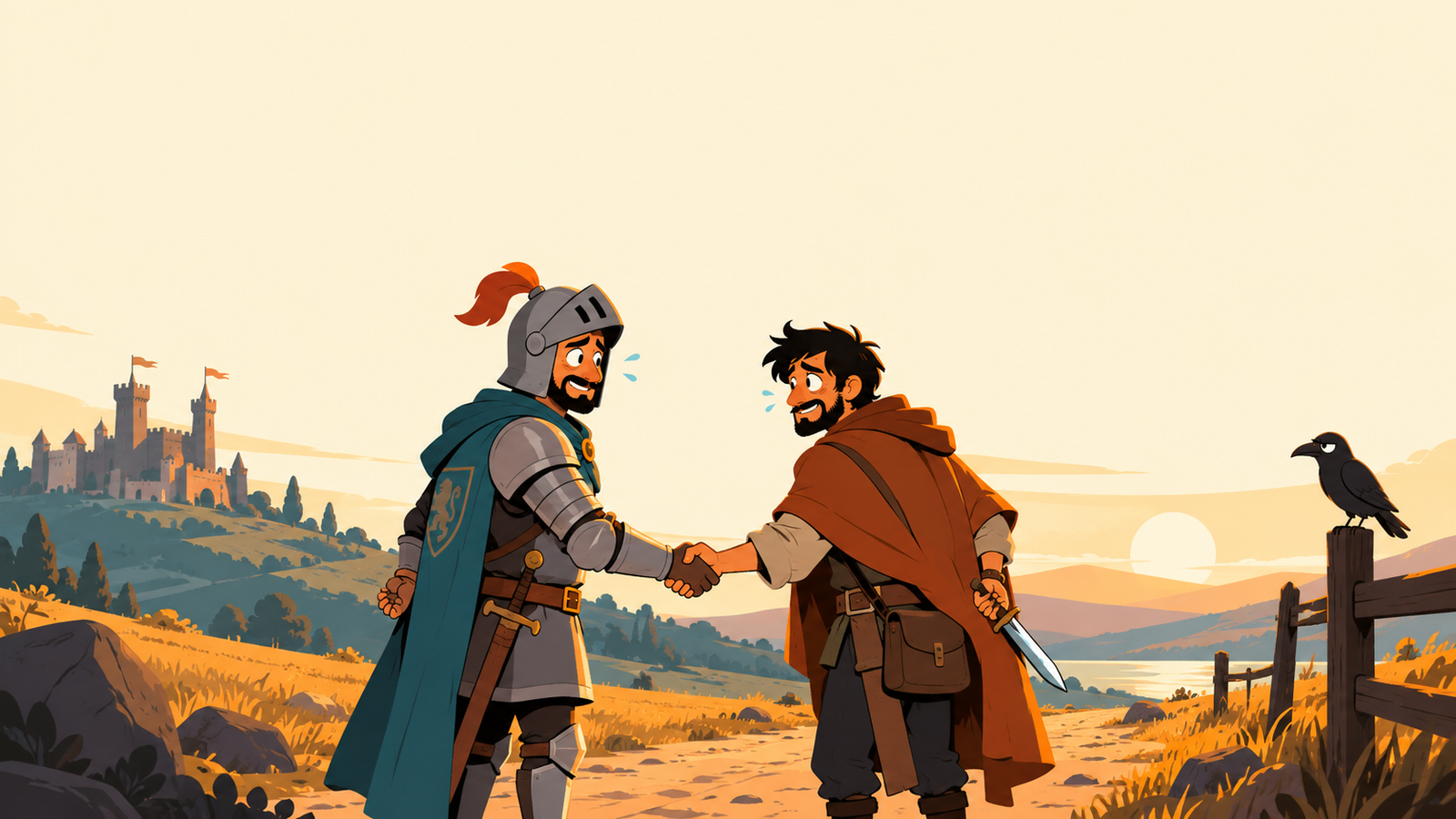
Picture it: you meet a stranger, and instead of waving like a normal person, you grab their hand and move it up and down. If aliens were watching, they'd file this under "bizarre mating ritual" and take notes.
Yet we do it every day. Job interviews, business deals, awkward family reunions with that uncle. So how did grabbing someone's hand become polite instead of the opening move of a fight?
The Leading Theory: "Look, No Weapons!"
The most popular explanation goes back thousands of years. Back then, nearly everyone walking around had a sword, a dagger, or at least a very pointy stick. Meeting a stranger was a gamble.
The solution: show your right hand (the sword hand) empty and clasp theirs. Now neither of you can draw a weapon, and both of you are standing there awkwardly holding hands with someone you don't trust. Technically a truce. Emotionally, a hostage situation.
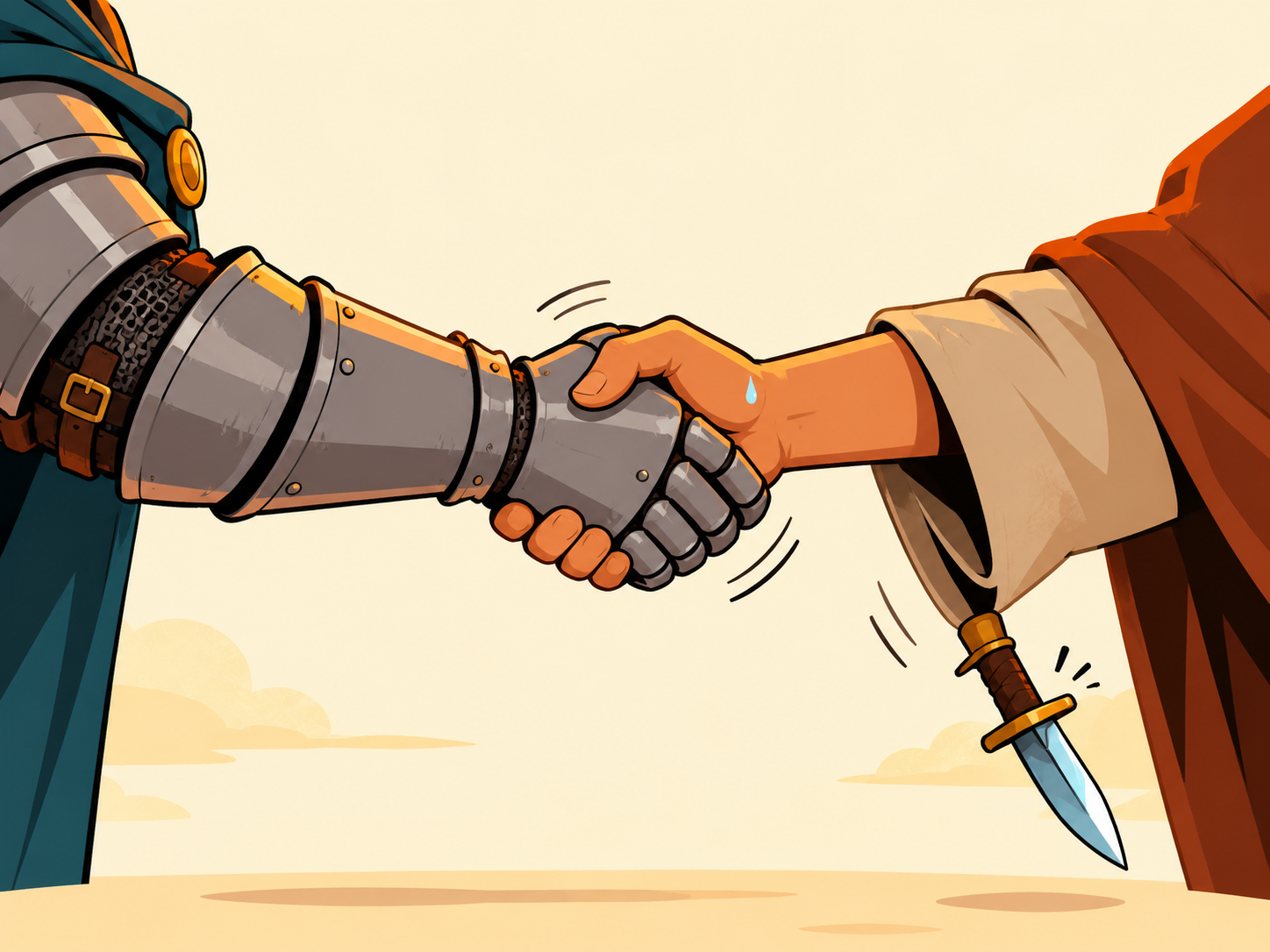
Some say the up-and-down shake was added to dislodge any knives hidden up the sleeve. That's probably the oldest security pat-down in history, minus the airport queue.
The Evidence (Yes, There's Some)
Ancient Greek art shows people clasping hands, including on grave monuments and in scenes of agreements and farewells. Assyrian and other ancient Near Eastern carvings show similar gestures between rulers sealing deals. So the handshake is old. Older than your Wi-Fi password, and arguably more reliable.
Historians admit nobody can pinpoint the exact moment someone said, "Hey, what if we just grab each other's hands?" The "no weapons" story is a tidy guess, not a signed confession.
Plot Twist: Not Everyone Agrees
Other theories say the handshake was about sealing promises, with the hands acting as a physical symbol of "I'm in." Hand-holding as a pact makes sense: it's hard to break a deal when you're literally still touching.
Then there's the Quakers, who in the 1600s reportedly pushed handshakes over bowing, because bowing was too fancy and hierarchical. Handshakes treated everyone as equals, which is a very Quaker way to win an etiquette argument.
So Why Does It Stick Around?
Because it works. In seconds, a handshake communicates trust, confidence, and "I'm not carrying a knife." Studies have even suggested handshakes affect first impressions. Which means your limp, damp handshake has been silently costing you jobs.
And yet, we've all experienced the tragic variants:
- The Bone Crusher: Someone with something to prove. Your fingers file a complaint.
- The Dead Fish: Cold, limp, and apologetic.
- The Double Grab: One hand wasn't enough, so they added a second for "warmth." Now you're trapped.
- The Failed Fist Bump Transition: Two humans, two different plans, zero dignity.
The Verdict
We shake hands because ancient humans needed a quick way to say "I come in peace" without a lawyer. The weapon-check origin may be partly legend, but it's a charming one, and it explains why we still treat a hand extended in friendship as a very small act of bravery.
So next time you shake someone's hand, remember: you're carrying on a tradition older than writing. Try not to ruin it with a dead fish.